Event 1
Casey Hartman possession
[Casey Hartman possession](entity:event-recall-event-casey-hartman-possessio-91a0ec469a91) is the event in which [Casey](entity:character-recall-character-casey-87dc9486b78c)’s sudden assault on his family leads Father Sutherland to identify him as genuinely possessed. Recounted first through [Danny Hartman](entity:character-recall-character-danny-hartman-eba300f82267)’s account of the attack and then through the priests’ examination of Casey, it moves from a family’s bafflement and fear to a religious diagnosis with urgent consequences for how the boy can safely be treated.
## Background and First Signs
Danny tells Jason Crowder that he and [Jack Bittner](entity:character-recall-character-jack-bittner-0bfc722b6230) reached the Hartman home at about eleven o’clock and found [Liz Hartman](entity:character-recall-character-liz-hartman-ee2c1fbf0dbb) battered, [Ron Hartman](entity:character-recall-character-ron-hartman-940f0ea32ab7) limping, and Carolyn Hartman shaken. The violence had begun inside the house without warning: Casey’s family had been going about an ordinary evening when they heard noises from his room. Ron, whose account Danny relays, described Casey striking the floor with a relentless rhythm. Though skinny and not yet grown into his body, Casey hit hard enough to rattle the windows and make objects jump on his dresser; the wooden floor was dented and bloody.
Liz went to Casey first, trying to restrain his hands before he injured himself further. He slashed her hairline and struck her in the face. Ron could not overpower his son, who hurled him across the room. Carolyn had entered during the commotion, and Casey then attacked her, hitting her and attempting an act of sexual violence against his sister. Liz intervened. Danny’s account dwells on the reversal at the center of the scene: the child who was ordinarily his family’s boy had become the source of mortal danger to his mother, father, and young sister.
The assault initially presented itself as a crisis with competing explanations, not as an established supernatural fact. Danny could not say what had caused it, but he described Casey’s growling and roaring and the difficulty of restraining him as unlike anything he had witnessed. Jack Bittner had used force to subdue the boy, and Danny acknowledged that the scene might otherwise have looked like excessive force by an officer. His insistence that he had seen Casey’s attack firsthand was what led him to seek a priest’s examination rather than treat the incident as an ordinary arrest.
## Examination and Diagnosis
The decision to bring in a priest did not settle what had happened to Casey. Danny Hartman admitted that he was no expert in possession and did not know what to call the episode; what he could testify to was the bedroom’s growling and roaring, Casey’s violent resistance, and the effort it took to restrain him. Jason Crowder, facing Ron Hartman’s demand for an explanation before he had even seen the boy, resisted naming a cause. He said the investigation should consider other possibilities first, including a seizure or a previously undetected psychological condition. The exchange left the family caught between the frightening force of what they had witnessed and the danger of mistaking illness for the supernatural.
Father Sutherland treated that uncertainty as a serious responsibility rather than a reason to rush toward ritual. He told the Hartmans that he had been present at four exorcisms. In two cases, what seemed to be possession was instead an untreated personality disorder or a child’s performance, shaped by an intense desire for attention and her parents’ religious zeal. The consequences of those mistaken judgments were devastating: the untreated woman’s mental and emotional condition worsened, and she eventually died in an institution; the child injured herself, grew resentful of her parents, and later died of a heroin overdose at nineteen. These precedents made misdiagnosis more than a theological error: it could deepen suffering and distort the care a vulnerable person needed.
The other two cases in Father Sutherland’s experience, by contrast, met the conditions he associated with demonic possession, and both people recovered completely. That distinction informed his judgment of Casey. When Danny asked whether the priest was sure, Father Sutherland answered that he was. His certainty followed an acknowledged process of discernment, not the assumption that extreme behavior alone proved an evil presence.
Crowder also explained that possession involved the question of why a particular person had been selected as a host. In cases considered authentic, the choice was seldom random; some logic usually connected the spirit to its host. Liz Hartman heard this as a possible accusation that Casey had somehow deserved his condition. Father Sutherland immediately rejected that implication, telling her there could be many reasons someone became a demon’s host. The idea of selection offered a way to investigate the episode, but it did not establish guilt in the person suffering it.
The diagnosis had immediate practical consequences. Father Sutherland wanted to check Casey’s heart rate and make sure the boy was out of danger without waking the presence he believed was inhabiting him. He opposed calling doctors or paramedics because he expected them to administer a sedative, which he feared could prove disastrous. The episode therefore placed religious and medical responses in tense proximity: the priests were not simply choosing a label, but making decisions about restraint, monitoring, and treatment while trying not to provoke a potentially lethal crisis.
## The Presence Speaks
The examination gives way to a more disturbing kind of evidence when the boy answers Father Sutherland’s question about his name. Casey says, “Malephar,” and Sutherland immediately asks where he heard the word. The exchange identifies the name the presence gives for itself, but does not establish where Casey learned it; the question leaves that uncertainty open even as the priests’ concern sharpens.
The voice emerging from Casey also connects the family’s crisis to the Sweet Sixteen killings. When Jason Crowder challenges Jack Bittner about why he thinks Casey is the killer, a deep, ghastly voice answers with a graphic claim about Joy Smith’s rape and the killer’s arousal. The group turns toward the speaker, and Ron Hartman reacts in horror. Casey’s face is described as contorted with unmitigated evil. The moment does not merely add another symptom to the attack: it makes the boy appear to possess knowledge, or to speak with the identity, of the murderer the officers are pursuing.
The presence then turns its attention to Bittner, addressing him by name while the officer is trying to restrain Casey. In a wheedling, derisive voice, it claims that Bittner loves his daughter but lusts after her friends, and begins elaborating on the fantasies it attributes to him. The taunt is presented as a revelation aimed at humiliating and provoking Bittner, not as a confession by Casey in his ordinary voice. The possessed boy has become a channel for an intelligence that exploits private shame as readily as physical violence, making the struggle in the room psychological as well as bodily.
## Recurrence and Retrospective Significance
Casey’s possession later becomes a point of comparison when Jason Crowder describes Malephar entering his own body. Crowder believes the demon had tried to govern him as it had governed the teenager, and says it had controlled innumerable human hosts before them. The account recasts the Hartman crisis as more than an isolated outbreak: Casey’s experience had shown Crowder what the demon’s domination could look like, while Crowder’s own later struggle makes clear that the danger could move beyond the family and the boy who first drew the priests’ attention.
The episode’s decisive significance lies in the way it joins bodily violence to a problem of interpretation. The injuries in the Hartman home could prompt medical investigation, police restraint, or a religious diagnosis, and the wrong explanation carried risks of its own. Father Sutherland’s certainty that Casey was possessed therefore stands beside his caution about prior misdiagnoses and the need to assess the boy without provoking the presence. Once Casey speaks the name Malephar and appears to voice the [Sweet Sixteen Killer](entity:expression-recall-expression-sweet-sixteen-kill-420ef6e3111f)’s knowledge, the crisis expands from a family emergency into evidence of a larger threat—one that Crowder later recognizes as capable of seeking another host.
Event 2
Jack Bittner suicide
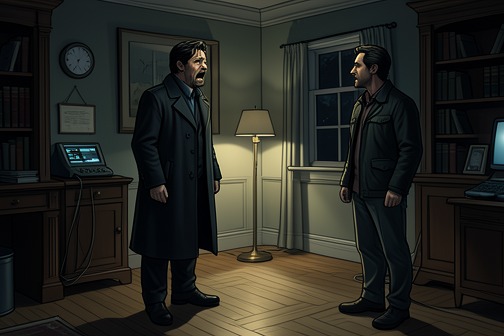
[Jack Bittner’s suicide](entity:action-recall-action-jack-bittner-s-suicide-459fa68d52a0) is a turning point in the attack at the Hartman home: the demon makes a police officer kill himself, using Bittner’s daughter and his own service weapon to turn fear into a fatal act. Witnessed by Jason Crowder, the death exposes the demon’s ability to manipulate a person through intimate emotional pressure as well as physical violence. Bittner fires once, but the bullet strikes the headboard; moments later, the demon’s taunts and impersonation of Celia drive him to put the gun in his mouth and pull the trigger.
## Background and Intrusion
During the possession crisis, Crowder is isolated in a bedroom and terrified that the demon may attack him again. He expects Father Sutherland or [Danny Hartman](entity:character-recall-character-danny-hartman-eba300f82267) to come through the door, but it is Bittner who arrives. The circumstances of Bittner’s escape from the police cruiser are not explained at that moment; Crowder notes that he will learn how it happened later. In the room, Bittner fires a shot that bursts plaster above the headboard. The demon is attached to his upper body, and he blunders backward before landing on the floor.
The immediate scene makes Bittner appear to be both armed and under attack. He has apparently dropped the gun while trying to slap the demon, which taunts him in an indecent-sounding language. The demon then climbs off his supine body. Bittner scrambles to his knees and retrieves the weapon. That brief change in the demon’s position creates the opening for its next tactic: it does not simply overpower him, but speaks in a new voice, calling him Daddy and pleading that he not leave.
## The [Demon](entity:creature-recall-creature-demon-d2c053badcbd) Uses Celia’s Voice
Bittner recognizes the voice as Celia’s and says her name. The appeal is specifically shaped around the father-daughter relationship; the voice repeats its plea, presenting itself as a child afraid of being abandoned. Crowder can see Bittner’s face despite the blood on it, and describes his eyes as wide and staring. The demon has shifted from attaching itself to Bittner’s body to addressing him through a voice that he understands as his daughter’s.
The deception becomes explicit when the creature expands and no longer resembles a child. It tells Bittner that Celia despises him and accuses him of abandoning her. When he reaches uncertainly toward the gun, the demon urges him to use it and taunts him about the futility of doing so. Bittner recognizes that the voice is not Celia’s, whispering that it is not his baby. The demon confirms the impersonation, then threatens that Celia will hear all about her father the next day. The threat turns the apparent plea into a calculated humiliation: the demon presents Bittner’s death as something his daughter will be made to learn about.
## The Suicide
As Bittner steadies his hand and draws the gun, the demon recites details about him as if delivering a death notice: his name, his age of forty-six, his twenty years as a [Chicago Police Department](entity:organization-recall-organization-chicago-police-d-a75824b356ea) veteran, and a report that he died the previous night in an upscale [Lincoln Park](entity:location-recall-location-lincoln-park-f8120bdbe6d6) home. The speech places his identity and public occupation beside the death the demon is bringing about. Bittner looks at the gun as though it has become a deadly viper and asks what he is doing. The demon answers by celebrating the prospect of sending him to join his mother in hell.
Bittner’s expression registers the horror of what is happening. The barrel drifts toward his open mouth, passes his lips, and his trigger finger turns white. Crowder looks away too late: he sees Bittner squeeze the trigger and sees the back of his head explode. The event is therefore a suicide in its physical action, but the scene frames it as a killing engineered by the demon. Bittner handles the weapon and pulls the trigger; the demon has manipulated the moment through threats, an impersonated daughter, and language that makes the gun seem both frightening and inescapable.
## Witnesses and Significance
The door swings toward Crowder, narrowly missing his face, and Danny Hartman stumbles into the room. He stops beside Crowder, gaping as Bittner’s slouching body topples sideways. The demon turns toward them, now unmasked in expression but still wearing [Casey Hartman](entity:character-recall-character-casey-hartman-5eed61472781)’s body. Danny’s response is a whispered expression of shock. The arrival comes after the shot, so neither he nor Crowder can intervene before Bittner dies; both are left to witness the body and the demon’s revealed face.
The scene also makes the demon’s cruelty personal rather than merely spectacular. Bittner is not killed in an impersonal struggle: the demon invokes Celia, an accusation of abandonment, and the prospect of her learning about her father’s death. Its use of Bittner’s police identity in the death-notice-like recitation sharpens the contrast between his long public service and his helplessness in the room. For Crowder, the death is a firsthand horror: his account moves from hoping Bittner will release him from danger, to fearing that the officer might shoot him, to watching Bittner die by his own hand. The demon’s control of the scene lies in making that weapon, that family bond, and Bittner’s own actions converge on a death witnessed by the two men who enter too late.
Event 3
Peter Sutherland’s death
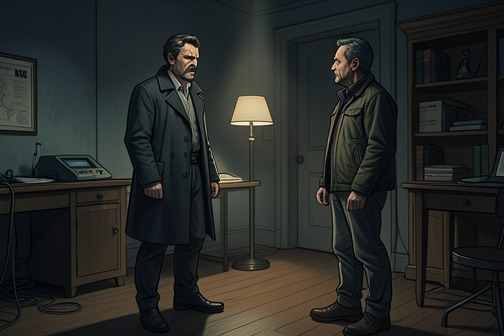
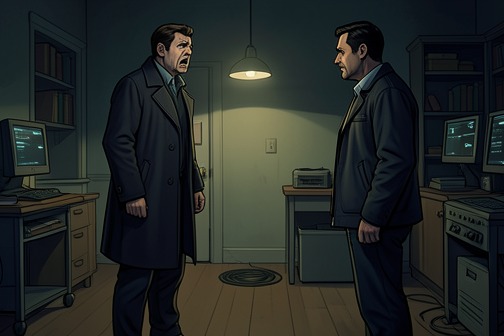
[Peter Sutherland’s death](entity:event-recall-event-peter-sutherland-s-deat-30d2ba0bfc6a) is the violent rupture of Jason Crowder’s trust in his mentor. In [Casey Hartman](entity:character-recall-character-casey-hartman-5eed61472781)’s bedroom, Crowder confronts Sutherland over the Sweet Sixteen killings; their argument becomes a fight, and Crowder throws the priest through a broken window into the storm below.
## Accusation and Escalation
Crowder’s certainty that he knows the truth turns the confrontation from questioning into accusation. He presses Sutherland about how the murdered girls were chosen and whether they were connected to the church, challenging the priest’s authority and the account of their relationship. Sutherland answers by recalling that he took Crowder in, trained and counseled him, supported his progress with his superiors, and helped him through his fear of women. The appeal to their history cannot quiet the suspicion: Crowder asks whether Sutherland’s interest was in young girls, and Sutherland angrily denies killing them, insisting that he has made mistakes like any man.
Sutherland then frames Crowder’s decision to believe the accusation as siding with evil. Crowder shoves him; Sutherland recovers and strikes Crowder across the jaw, then beats him while denouncing him as a betrayer and deceiver. Crowder fears that losing consciousness will mean death. If Sutherland is the [Sweet Sixteen Killer](entity:expression-recall-expression-sweet-sixteen-kill-420ef6e3111f), Crowder reasons, the priest is already a practiced murderer and may kill the other people in the house rather than leave witnesses behind. That fear brings Crowder back into the struggle, where the former mentor is no longer simply an authority being challenged but an immediate threat.
## The Fight and Fatal Fall
Crowder tried to stop Sutherland from leaving, pushing him back toward [Casey](entity:character-recall-character-casey-87dc9486b78c)’s bed and considering whether [Danny Hartman](entity:character-recall-character-danny-hartman-eba300f82267)’s handcuffs could keep him in the house. Sutherland answered with a right-handed blow to Crowder’s jaw, then drove him down with a barrage of punches. As Crowder struggled to stay conscious, he feared that the priest might kill not only him but also the Hartman family, whose testimony could obstruct Sutherland’s escape.
Crowder recovered enough to fight back. When Sutherland moved toward the door, Crowder caught him and slammed him against the wall, then bit into his throat and tore away flesh. He throttled Sutherland and struck him in the face, sending him into Casey’s window; the pane shattered, opening the bedroom to the storm. Crowder understood the struggle as a choice between their lives: he believed Sutherland would have killed him if he had not resisted, and that only one of them would leave the room alive.
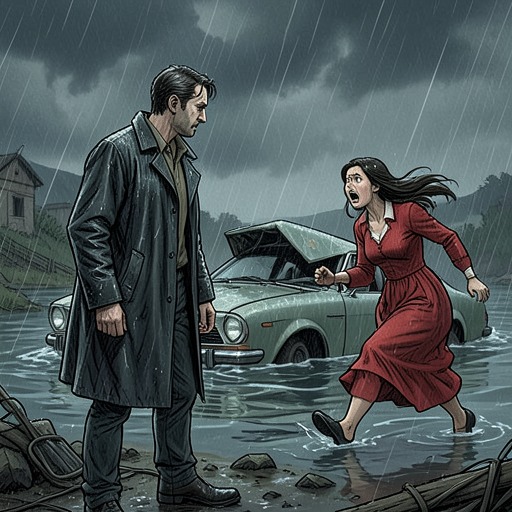
Crowder lifted Sutherland against the damaged window, and the remaining glass gave way. With wind and rain blowing through the opening, Sutherland pleaded for mercy and forgiveness. Crowder cast him outside. From the jagged opening, Crowder saw Sutherland plummet to the Hartmans’ concrete patio and land face-first, shattering his skull. The priest’s body lay motionless as rain washed away the blood.
After staring down at the body for about a minute, Crowder turned and saw Danny watching from the doorway. The death thus ends the physical confrontation but does not settle the question of Crowder’s guilt or judgment: he has killed the man who was his mentor, and the sight of the body becomes part of the burden he carries afterward.
## Evidence After the Death
The later search of Sutherland’s study complicated the accusation that had ended in his death. A floorboard had been repeatedly lifted and replaced; when Danny Hartman pried it up, the shallow space beneath contained no keepsakes from the six murdered girls, only a recent Penthouse and an old Hustler. Crowder began to weep. The hiding place looked suspicious, but what it concealed did not support the specific suspicion that Sutherland had collected mementos of the victims.
Crowder eventually named the deeper consequence as another failure of judgment: he had again believed an innocent man guilty of murder. His grief surfaced as he fled down the basement stairwell, grateful that no parishioners or employees could see his tears. Sutherland’s death therefore becomes more than the fatal end of their confrontation. It marks a conviction acted upon before Crowder could establish the truth, leaving him to confront not only the loss of his mentor but the possibility that his certainty had helped make an innocent man’s death irreversible.
## The Burden of Judgment
The death’s moral weight resurfaces in Crowder’s later reckoning at the reservoir. Plunging into its violent waters, he believes the Sweet Sixteen killers will terrorize the city no longer, but recognizes that his own survival could let the demon escape; he thinks Chicago would be safer if he died with it trapped inside his body. He also believes he deserves punishment, perhaps even death, yet still wants to live. That conflict does not erase his responsibility for Sutherland’s fall: it places the killing within a larger struggle between the wish to stop evil and the terrible cost of acting under uncertainty.
Event 4
Sweet Sixteen serial murders
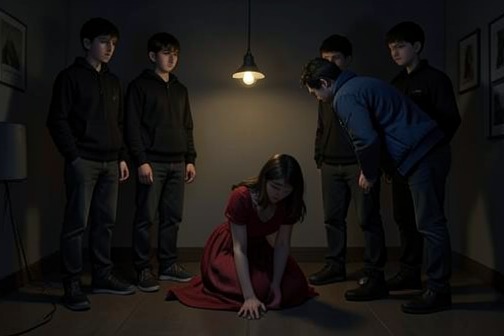
The [Sweet Sixteen serial murders](entity:event-recall-event-sweet-sixteen-129eb7af204a) are a campaign of killings that makes sixteen-year-old girls its defining target and transforms a police investigation into a crisis of trust: the first seven victims are killed by [Danny Hartman](entity:character-recall-character-danny-hartman-eba300f82267), while his partner [Tyler Raines](entity:character-recall-character-tyler-raines-b6a0fb283656) becomes an apprentice and commits a later murder. The case is not simply a sequence of crimes. Its escalating pattern, misleading evidence, and concealed connection to respected police officers make the search for the killer inseparable from the question of whom the investigators can believe.
## Pattern and Escalation
The first seven murders grow more intense from one killing to the next. [Liz Hartman](entity:character-recall-character-liz-hartman-ee2c1fbf0dbb) describes the offender as whipping himself or herself into a wilder frenzy with each successive crime, a pattern that makes the violence seem to belong to one rapidly escalating perpetrator. At the same time, the case generates a competing theory: the presence of semen on the victims could be consistent with two killers, perhaps a male-female pair. The evidence therefore offers a pattern without an immediately secure explanation of who produced it.
The seventh murder marks a particularly brutal return. [Makayla Howell](entity:character-recall-character-makayla-howell-a11e7238eccb), a sixteen-year-old Black girl and previously a model student, had begun defying her parents and dating older boys during her sophomore year. One of those boys got her drunk and attempted to take advantage of her; after she refused him, he forced her to leave his apartment and walk home. An unidentified person offered her a ride, which she accepted. The killer took her to a secluded park, where the crime became the most sadistic atrocity reported up to that point. The account leaves the precise violence unstated, but emphasizes the uncertainty surrounding how she was lured from the road and the failure of authorities to identify who offered the ride.
The victims are also given a public life through photographs, names, and the futures they will not have. When Liz shows Crowder [Julia Deveroux](entity:character-recall-character-julia-deveroux-11649da40ae2)’s school photograph, he recognizes her as a girl he had glimpsed among Danny’s thoughts: she had appeared as an ordinary schoolgirl walking with friends, unaware of the danger stalking her. Liz’s wall of photographs also bears the faces of the seven earlier victims, smiling and anticipating careers, friendships, and families. The contrast between those imagined futures and their deaths makes the case more than a rising tally of crimes; each image insists on the individual life erased by the killer’s pattern.
## Suspects, Evidence, and Misreading
The investigation’s uncertainty is sharpened by supernatural interference. When Malephar seizes Danny’s arm, Crowder experiences a montage of the [Sweet Sixteen Killer](entity:expression-recall-expression-sweet-sixteen-kill-420ef6e3111f)’s past and future victims. The visions place Julia among Danny’s victims, and later show Liz in danger as well. Yet the images do not provide a clear, usable account of how the crimes will unfold. They make Crowder aware of threats while leaving him to interpret identities and timing under pressure. When Julia is found dead, he wonders whether he could have prevented it; the vision becomes a source of guilt as well as a clue.
The case also depends on information that is disclosed too late or under compromised circumstances. Three days before the investigation’s decisive revelations, the killer had visited Peter Sutherland’s confessional and shared details about objects taken from victims and hidden at home. Sutherland says he strongly suspects the person who confessed is responsible, but his vows prevent him from openly identifying the penitent. The confession therefore establishes that the killer has privately disclosed incriminating knowledge, while the rules of secrecy limit how that knowledge can be used.
A second apparent lead turns the investigators toward Danny’s new partnership. In a confessional conversation with Crowder, Raines says he suspects that his popular new partner is the Sweet Sixteen Killer. He has worked with Danny for only a couple of days; Danny previously partnered with [Jack Bittner](entity:character-recall-character-jack-bittner-0bfc722b6230), who died by suicide. Raines also says Danny told him about a murder before it happened. That advance knowledge makes Danny appear deeply implicated, but the larger case remains distorted by competing explanations, concealed motives, and Crowder’s visions. The sequence of disclosures does not immediately settle whether Danny is the killer, whether another person is acting alongside him, or how Malephar has affected what Crowder has seen.
## The Killers and the Victims
The distinction between the first seven killings and the later crimes becomes crucial. A newspaper headline reports that the death toll has reached eight after the latest atrocity, while Liz argues that the new murder’s changed method suggests a copycat rather than a continuation of the same hand. Crowder considers the timing of Julia’s death and concludes that Danny could not have committed it at the reported hour. The shift in method and timing thus changes the case’s shape: instead of assuming one offender is responsible for every death, investigators must account for more than one killer.
The subsequent revelation identifies Danny as responsible for the first seven girls and Raines as his accomplice, or, in Danny’s own term, his apprentice. Raines is the figure associated with Julia’s murder: Crowder’s earlier vision includes her among the victims Danny’s thoughts seem to encompass, but he later realizes that Tyler Raines has disemboweled her. Those moments underscore the difference between seeing a victim in a disturbing mental montage and correctly identifying the person who will kill her. The case’s apparent unity conceals an apprenticeship and a succession of perpetrators.
The victims’ local connections make the crimes penetrate the community rather than remain distant headlines. Joy Smith, one of the victims, lived twelve blocks from St. Matthew’s and had sometimes attended services with her aunt. She knew [Casey Hartman](entity:character-recall-character-casey-hartman-5eed61472781), a connection that Liz says likely led to Danny’s interest in her. At a later church service, Crowder faces a congregation forced to reckon with the revelation that Danny had been a longstanding member and a respected neighborhood police officer. The victims’ proximity to familiar streets, families, and institutions exposes how easily the outward respectability of the people around them can coexist with predation.
## Exposure and Consequences
Raines’s role is exposed in a public confrontation on a subway platform. Crowder identifies him to the arriving officers as the Sweet Sixteen Killer, and the platform descends into bedlam. The accusation brings the investigation out of private suspicion and into public view, but it does not end the violence. In a later confrontation, Danny slashes Raines’s throat with a curved knife, then tries to frame Crowder by placing the weapon in his hand and preparing to claim self-defense. Raines is left bleeding on Patterson’s back. The attempted framing demonstrates that identifying one killer does not simply restore order: Danny turns the investigation’s evidence and the scene of a killing into instruments for concealing his own responsibility.
The case’s aftermath is shaped by efforts to manage what can be told. After the possession crisis and the deaths surrounding it, Crowder and Danny agree on a simplified account for the authorities: they will report that a demon possessed Casey Hartman, that Bittner committed suicide, and that Sutherland died by suicide after attacking Crowder. Liz agrees to repeat their version. That account does not offer a straightforward public explanation of the crimes; it shows the pressure exerted by events that the survivors believe cannot be presented plainly.
Crowder later addresses the congregation about the Sweet Sixteen Killer as a killer unmasked among people who had known and respected Danny. He links the crime’s public horror to the vulnerability of children and to the local loss represented by Joy Smith. The murders leave the congregation’s faith tested and its view of human nature darkened. Their narrative significance lies in this double exposure: the victims’ deaths reveal the cost of treating girls as targets, while the investigation reveals that a uniform, a popular reputation, and a place inside trusted institutions can obscure the person responsible.
Event 5
Peter Sutherland’s death during Casey’s exorcism
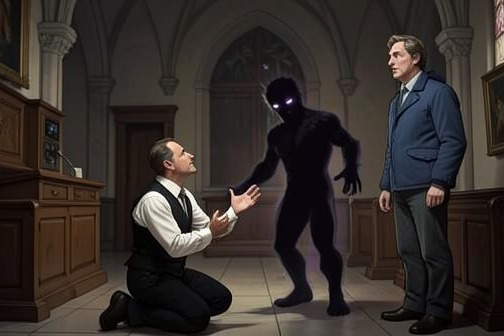
[Peter Sutherland’s death](entity:event-recall-event-peter-sutherland-s-deat-30d2ba0bfc6a) during [Casey Hartman](entity:character-recall-character-casey-hartman-5eed61472781)’s exorcism is both the fatal cost of the rite and the turning point that exposes how possession moves between hosts. The exorcism saves [Casey](entity:character-recall-character-casey-87dc9486b78c), but Father Patterson later reconstructs a chain in which the expelled demon enters Sutherland, Sutherland leaps through a window, and the demon then passes into Jason Crowder. Crowder’s public account honors Sutherland while carefully limiting what the congregation is told.
## Background and Stakes
Before the exorcism, Sutherland treats Casey’s condition as a grave question of diagnosis, not an excuse to rush into a ritual. Through Crowder, he insists that the boy must first be assessed and that possible causes include a seizure or an undetected psychological condition. His caution is grounded in experience: he has attended four exorcisms, two of which he believed had been wrongly directed at mental illness or a child’s attention-seeking behavior. In those cases, the consequences were devastating; the adults involved were not helped by being labeled possessed, while the child later suffered serious injury and died of a heroin overdose. By contrast, the two cases Sutherland judged authentic ended in complete recoveries.
That history gives Casey’s exorcism unusually high stakes. Sutherland knows that mistaking illness for possession can do lasting harm, but he also believes that refusing to act when possession is real can leave the host in danger. Once Casey is in peril, Sutherland resists calling doctors or paramedics because he fears they would sedate the boy, an intervention he believes could prove disastrous. The decision puts the distinction between medical treatment and spiritual intervention under pressure: caution remains essential, but delay and the wrong kind of care may also carry risks.
Crowder’s account of possession adds another uncertainty. He explains that an authentic possessing spirit is seldom thought to select a host at random, but Sutherland immediately guards against interpreting that idea as evidence that Casey deserved what happened. The question of why Casey became the host therefore remains separate from blame. The exorcism is undertaken to save him, not to judge him.
## The [Exorcism](entity:concept-recall-concept-exorcism-9c3d405a4949) and Sutherland’s Death
Sutherland performs the rites that drive the demon out of Casey. The immediate success of the exorcism is inseparable from its cost: Casey is saved, but Sutherland dies. The supplied account does not describe the full ritual scene; its crucial sequence emerges afterward, when Patterson tells Crowder what he believes happened. In Patterson’s reconstruction, the demon left Casey, entered Sutherland, and Sutherland then leapt through a window to put an end to it.
Patterson’s explanation makes the death more than a separate tragedy following Casey’s recovery. It identifies Sutherland as the next host and interprets his leap as an attempt to end the threat. The demon does not, however, disappear with him. Patterson says it entered the nearest body after Sutherland’s death: Crowder’s. That disclosure changes the apparent meaning of the exorcism. The rite succeeds in freeing Casey, but it does not destroy the evil; it transfers the danger, and Crowder becomes implicated in a further stage of the same crisis.
## Recognition and Aftermath
Patterson’s account reaches Crowder in the hospital after Crowder has survived another encounter with the demon. He tells Crowder that he had once thought Crowder killed Sutherland. The revelation replaces that suspicion with a different explanation: Casey was possessed, Sutherland exorcised the demon, and the demon entered Sutherland before moving on to Crowder. Patterson’s reconstruction links the death to the later events in the tunnels, where matters came to a head. It also makes Crowder confront the possibility that his own actions and condition cannot be understood apart from what happened to Sutherland.
The physical aftermath underscores the danger’s persistence without making Sutherland’s death reversible. A doctor examining Crowder in hospital is perplexed by a wound that looks as though it was inflicted a month earlier and has mostly healed. Crowder feels grateful for the demon’s role in that recovery, while recognizing it as a monster. He has no reason to believe it is dead: it has sunk to the bottom of the reservoir, still alive. The exorcism’s apparent victory over the host therefore gives way to a larger, unfinished conflict.
## Public Account and Significance
At St. Matthew’s, Crowder delivers a sermon to a packed congregation, including [Liz Hartman](entity:character-recall-character-liz-hartman-ee2c1fbf0dbb) and her children. He opens by addressing rumors about Sutherland’s death and describes him as a man of faith and a pillar of the church. He then states that Sutherland died in service to God and to the congregation, presenting the death as sacrifice rather than disgrace. The parishioners respond with murmurs of assent and applause.
Crowder also acknowledges that he assisted in an exorcism and that Sutherland died as a result of the ceremony, but says the offending spirit was driven from its host and gives Sutherland, and God, credit for saving Casey. His account is deliberately incomplete: before speaking, Crowder recognizes that he intends to tell the truth, or at least most of it. The sermon thus holds public commemoration beside withheld knowledge. It preserves Sutherland’s self-sacrificing role and the fact of Casey’s rescue, while leaving the congregation without Patterson’s fuller account of the demon’s transfer to Sutherland and then to Crowder.
Sutherland’s death consequently marks both a completed act of rescue and an incomplete victory. His judgment and courage save Casey, but the transfer of the demon carries the crisis forward. The contrast between the congregation’s account of a priest who gave his life and the private reconstruction of a demon passing from host to host gives the death its double force: it is an act of service worthy of remembrance, and the beginning of consequences Crowder cannot publicly disclose.
Event 6
Ariana Patterson’s accidental death at Turkey Run
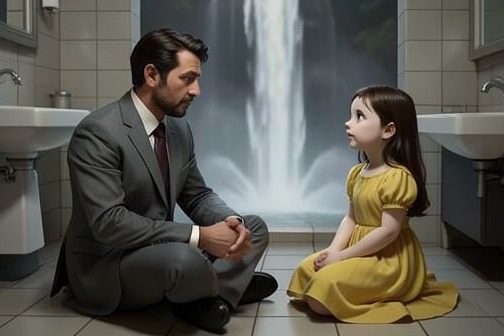
[Ariana Patterson’s accidental death at Turkey Run](entity:event-recall-event-ariana-patterson-turkey-8470a7acb8de) is the defining childhood loss in Father Patterson’s past: during a family visit to a waterfall, six-year-old Ariana fell from a cave ledge into deep water and drowned. The event is revealed not as an impersonal report but through her father’s grief-stricken recollection to Jason Crowder, where the uncertain moment of the fall gives way to a certainty that haunts him: he believes he should have gone into the water to save her.
## Background and Setting
Father Patterson recounts the accident while sitting across from Jason Crowder on the floor of a women’s restroom. Crowder asks whether he has heard of Turkey Run, an Indiana state park about four hours south of Chicago. Patterson’s answer opens a personal history far removed from the immediate danger occupying Crowder: [Tyler Raines](entity:character-recall-character-tyler-raines-b6a0fb283656) has fled St. Matthew’s and may soon be working alongside [Danny Hartman](entity:character-recall-character-danny-hartman-eba300f82267), while Crowder struggles to keep his attention on the conversation.
Before entering the priesthood, Patterson had married Laura. Their daughter, Ariana, was born a year after the wedding. He remembers taking her around Midwestern state parks with Laura, describing the young child as easy to carry and recalling how joyfully she ran about. The affection in that memory matters: his account is not only a confession of failure but the story of a father who loved his daughter and has never stopped experiencing her loss as his own responsibility.
Patterson describes himself as intensely protective. Laura called him the Safety Monitor, and he says that his longstanding paranoia intensified after Ariana was born. The family’s visit to Turkey Run brought that disposition into conflict with the outing they had planned. While they were looking at brochures in their cabin, Laura learned of the waterfalls. Ariana became eager to see them, and the family went the following morning. The waterfalls could be viewed from inside caves, a setting that placed the family close to both the spectacle and the danger of the water.
## The Fall
The trip turned into an argument. Patterson recalls that Laura accused him of overprotectiveness and used a stereotype that angered him; he understood her words as an attack on his masculinity. His account describes an escalating marital conflict, with Laura doing most of the shouting and Patterson acknowledging that he overreacted too. The disagreement did not remain between the adults: Laura took Ariana by the hand and led her to the edge of the cave to make her point.
At the waterfall, Laura showed Ariana how to hold out a hand to catch the falling water. Ariana was small even for her age, and she could not reach the stream as Laura could. Laura had her lean farther out. Patterson, already alarmed by how close they were to the cave’s lip, saw Ariana rise onto her tiptoes above a drop of roughly one hundred feet and moved to pull her back. Laura stepped between them. The parents collided, and Patterson cannot say which of them nudged the child. One moment Ariana was reaching toward the spray; the next, she was gone.
The waterfall’s roar was so loud Patterson did not hear Ariana scream, if she did. He ran through the cave and made his way down toward the water rather than leaping after her from above. The family later learned that the water was deep; Patterson had imagined it might be shallow or rocky. A diver eventually found Ariana. The medical cause of death was drowning, not the impact of the fall. Patterson states that no one entered the water in time to save her.
## Guilt and Aftermath
Patterson’s grief turns on two connected questions of responsibility. He blames Laura’s decision to bring Ariana to the edge while trying to prove a point, but he also condemns his own response after the fall. He had told himself that jumping would be irresponsible because he might die as well. As he ran toward the water, however, he recognized the flaw in that reasoning: if Ariana had survived the fall and the water, there might still have been a chance to rescue her. He has no certainty that a jump would have saved her, but the possibility that he failed to try remains central to his remorse.
When Crowder tells him the fall was an accident and that he loved his daughter, Patterson rejects the past-tense consolation. He insists on the present: he loves Ariana. His correction refuses to make love a quality confined to the time before her death, and it exposes why reassurance cannot settle his guilt. He does not see the accident as absolving him; for him, the decisive failure was not going into the water quickly enough.
## Recollection and Narrative Significance
The account is a flashback delivered through Father Patterson’s memory, but the novel presents it in the pressure of an ongoing investigation. Crowder is distracted by the possibility that Raines may act before nightfall and by an elusive thought connected to what he saw when Malephar grasped Danny. The conversation therefore places a private history of accidental death beside the current threat of deliberate killings. Patterson’s loss does not explain those crimes, but hearing it changes Crowder’s understanding of the priest’s cynicism.
After Patterson finishes, Crowder recognizes the source of that cynicism, even as his thoughts return to the murdered girls. The shift preserves the distinction between the two kinds of suffering in the scene: Ariana’s death was an accident as Patterson recounts it, while the girls’ deaths belong to the violence Crowder is trying to stop. The remembered fall also gives the reader a concrete measure of Patterson’s self-reproach. He is haunted not only by the instant Ariana disappeared from the ledge, but by the choice he believes followed it: running to the water instead of jumping in.
Event 7
地下货运隧道决战
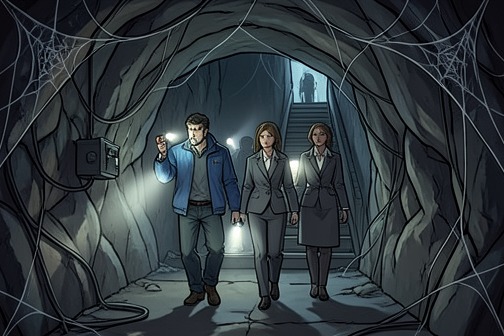
The Deep Tunnel showdown turns Chicago’s hidden infrastructure into a killing ground: a passage [Danny Hartman](entity:character-recall-character-danny-hartman-eba300f82267) used to reach a murder scene becomes the route through which he tries to eliminate Jason Crowder and leave him bearing the blame. Crowder enters the tunnels with Father Patterson, [Tyler Raines](entity:character-recall-character-tyler-raines-b6a0fb283656), and Danny, whose apparent role as an ally gives way to open violence underground.
## Approach and Discovery
The group moves through a narrow, cobwebbed corridor by flashlight. Cockroaches scatter in the dark, but the passage is tall enough for Father Patterson to walk upright. After what feels like ten minutes, they reach another door. Danny uses a key; beyond it, the lock gives way to a steep flight of stairs. The descent takes them farther from the visible city and toward a space whose hidden connections matter more than its appearance.
On the way down, Crowder connects the passage to the murder of [Mary Ellen Alspaugh](entity:character-recall-character-mary-ellen-alspaugh-9363f988de2c). [Liz Hartman](entity:character-recall-character-liz-hartman-ee2c1fbf0dbb) had reasoned that the killer could not simply have walked away from a site crowded with witnesses and security cameras; there had to be a concealed way in and out. Looking at the tunnel, Crowder recognizes that Danny used it on the night of the murder. The insight is dangerous even before Danny reacts: Crowder knows he is close to breaking his pact with Malephar, and the tightening pain in his chest signals the cost of saying too much. As he struggles to breathe, he considers whether the demon’s protection of Danny might still be turned to his own advantage in the underground space.
## The Betrayal Underground
The discovery that Danny Hartman had used the tunnels to reach Mary Ellen Alspaugh’s murder site brings Crowder close to exposing him, but the accusation is perilous in more than one sense. Crowder feels Malephar’s pact tighten around him as he speaks; the pain pins him against the wall, and he knows he has come dangerously close to violating their agreement. With Father Patterson still behind them, Crowder weighs whether Malephar’s refusal to harm Danny might nevertheless be turned to his own advantage. The tunnels offer concealment, but they also make every movement difficult to witness or control.
Danny exploits that isolation by inventing a reason to turn Father Patterson toward the wall, then striking the priest at the base of the skull with his gun. Father Patterson collapses, and Tyler Raines protests that Danny cannot hit a priest. Danny denies both the blow and what follows: he draws a long, curved knife and slashes Raines’s throat. The wound opens deeply, blood spraying across Father Patterson’s motionless back. Danny then wipes the knife handle and places it in Crowder’s hand, declaring that Crowder attacked him and that he had to shoot in self-defense. The murders and planted weapon are one maneuver: Danny is killing witnesses while manufacturing a story in which Crowder is the assailant.
Crowder lunges before Danny can draw his gun, but Danny is quicker. Crowder’s knife misses; Danny drives a fist into his stomach. In the struggle, the flashlight falls, and its beam briefly finds Raines on his knees, still clutching his bleeding throat. Crowder kicks the light away as Danny reaches for it, plunging the corridor into darkness and gaining a moment in which to break free. The tunnel has become both crime scene and trap: Danny controls the weapon and the account of what happened, while Crowder has to survive without being able to see his pursuer.
Crowder escapes upward through an old grate, hurling himself shoulder-first against it at a steep angle. Its ancient bolts snap, and he plunges into a larger, dimly lit space below. He hits the ground on his lower back and buttocks, strikes the back of his head, and tumbles down slick concrete until he comes to rest near an underground river. Pain and disorientation leave him struggling to stand, while footsteps above confirm that Danny is following. Once on his feet, Crowder makes his way through ankle-deep water and recognizes the vast concrete conduit as part of the [Chicago Deep Tunnel Project](entity:object-recall-object-chicago-deep-tunnel-pr-6fe096578d63). A light downstream suggests that he is near the [Jewel Reservoir](entity:location-recall-location-jewel-reservoir-bdf56b3e0f80).
## Pursuit Toward the Reservoir
Crowder knows the underground river is no safe escape route. The current is strong, and wading deeper could carry him through the tunnel and out into the Jewel Reservoir’s falls; he has watched runoff roar from these enormous conduits and knows no one could survive the drop. His only chance, he decides, is to go upstream and find another exit. The infrastructure that once offered Danny Hartman a concealed route to a murder scene now narrows Crowder’s options to a race against the water and his pursuer.
Danny slides down the curved decline behind him with his gun drawn, cutting off the way back. Crowder runs toward the reservoir because there is nowhere else to go. Danny calls after him, asking whether he wants to hear what he plans to do after killing him, then turns the threat toward Liz Hartman. He describes her body in explicitly possessive terms and says he has thought about carving it up and eating it. The pursuit is not merely an attempt to silence Crowder: Danny uses the chase to make the danger to Liz immediate and personal.
Crowder is weakened and disoriented, while Danny appears at ease and has the strength and speed to keep after him. The runoff channel is about eighteen feet across, with water roughly six feet deep at its center; its curved concrete floor is slick with scum. Crowder considers jumping into the current but recognizes that he might not be able to climb out before it carries him to the reservoir. In the water he would also be a more exposed target, as Danny could run alongside and shoot whenever he surfaced. Crowder is not a strong enough swimmer to count on the current as an escape, and he sees no exit ahead. The chase therefore leaves him suspended between two lethal outcomes: being swept into the reservoir or being shot by Danny before he can find a way out.
## The Reservoir as a Moral Threshold
Earlier, Jason Crowder had gone to the Jewel Reservoir to think through the convenience-store killings and the pleasure he had felt while Malephar used his body to murder the men there. The same water now lies at the end of his flight, no longer a place to contemplate violence from a distance but a physical threat closing off escape. That return gives the pursuit an added pressure: Crowder is running toward a landscape already bound to his uneasy awareness of complicity, while Danny Hartman’s pursuit makes the reservoir’s danger immediate. At this point in the confrontation, Crowder has found no safe exit, and the choice between the current and Danny remains unresolved.
Event 8
Malephar exorcism
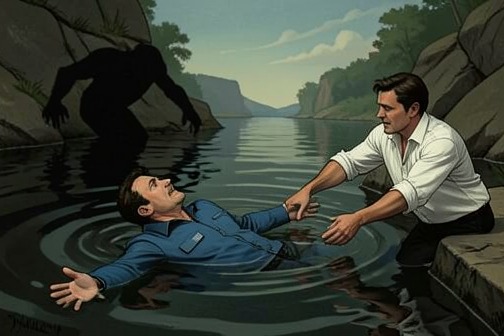
The [Malephar exorcism](entity:event-recall-event-malephar-0ca978804632) is Jason Crowder’s last effort to free himself from the demon at the reservoir, and a rite that becomes a physical struggle for survival. Prayer appears to break Malephar’s control, but not to end its capacity to act: the demon manifests outside a host and nearly drowns Jason before Father Patterson pulls him from the water.
## Background and Preparation
The confrontation at the reservoir follows the demon’s earlier possession of [Casey Hartman](entity:character-recall-character-casey-hartman-5eed61472781) and its later entry into Jason’s body. During the first exorcism, Father Sutherland asked the boy for his name; [Casey](entity:character-recall-character-casey-87dc9486b78c) answered, “Malephar,” prompting Sutherland to ask where he had heard the word. The name gave the priests a way to identify the entity, but not a simple explanation of its choices. Jason described host selection as seldom random in cases considered authentic, while Father Sutherland cautioned Liz that the reasons someone might become a demon’s host were numerous. The exchange establishes a distinction central to the later rite: possession demands resistance, but it does not prove that its victim deserved what happened.
The earlier ritual had joined formal prayer to direct commands. As Casey’s legs contorted, Father Sutherland began a familiar litany and Jason answered; later Jason opened the Bible and demanded that the demon depart from the child’s body. The language of the rite framed the conflict as both spiritual and bodily: Malephar had invaded a person, and the exorcists sought to remove it without treating the possessed child as the enemy. At another point, Jason reassured Liz that Casey did not have to be culpable for becoming a host. That understanding informs his later decision to risk himself rather than leave the demon free to choose another victim.
By the time of the reservoir confrontation, Malephar has been inside Jason for two nights. Jason has resisted its attempts to govern him, but the struggle has already brought him to a bathroom mirror with a razor drifting toward his throat. He knows the danger is not hypothetical: the demon can push at his defenses and exploit his body, while he cannot be certain either that he will regain control or that he can survive what he intends to provoke. [Danny Hartman](entity:character-recall-character-danny-hartman-eba300f82267)’s offer to become a more suitable vessel sharpens the stakes. When Danny asks, “Wouldn’t I be a better vessel for your passenger?” Jason understands that Malephar wants Danny, and that the reservoir contest must prevent the demon from securing him as its next host.
## The Rite and the [Demon](entity:creature-recall-creature-demon-d2c053badcbd)’s Counterattack
At the reservoir, Jason resumes the exorcism while in the water, directing its words against the presence inside him. His hoarse invocation, “By the power of the saints, I cast you out,” marks a change in the struggle: he is no longer only trying to keep Malephar from controlling his body but actively using that body to force the demon out. Malephar answers by pointing to Jason’s gunshot wound and the fact that it is healing, then invokes Jason’s survival in the rapids as proof that he owes the demon his life. The taunts turn rescue and recovery into weapons of persuasion, inviting Jason to mistake Malephar’s self-preservation for aid.
Jason recognizes the distinction even as he treads water. Malephar’s actions, he concludes, serve the demon’s own continued existence, not Jason’s welfare. He continues the rite with commands for the demon to depart, then begins the Lord’s Prayer. Its effect is immediate and physical: his body judders and thrashes as Malephar struggles to stop him. The prayer is no longer simply a statement of belief; within the scene, its recitation becomes the action Malephar cannot bear to let continue. Jason presses on despite the demon’s scream that it will never be defeated, hearing pain in the defiance.
When Jason reaches the prayer’s ending, the pressure inside him reverses and rushes away, and soothing air fills his lungs. For a moment, the release seems to confirm that the rite has succeeded. He remembers Danny’s neck breaking when Danny’s body struck the tunnel rim and concludes that the threat posed by Danny is over. With Malephar apparently gone and Danny dead, Jason believes he has survived the confrontation and need only swim to the reservoir wall to call for help. The relief is brief: something seizes his ankle and drags him underwater before he can reach safety.
## Physical Manifestation and Survival
The attack reveals a limit in Jason Crowder’s understanding of Malephar: he had never believed a demon could become physical matter without possessing a host. Yet beneath the water, Malephar appears as a larger-than-human, humanoid figure with a pulsing dark face, red eyes, and a fanged mouth. The vision is not merely an image in Jason’s mind. When he strikes it, its skin abrades his hand, and bloody whorls rise from the wound. The creature’s apparent relief at catching Jason before he can leave the reservoir suggests that taking physical form is difficult to sustain; the water threatens Malephar as well as its victim.
Nearly drowned and losing strength, Jason thrusts a hand into his pocket, seizes his crucifix, and drives it into Malephar’s left eye. Fire bursts at the point of impact; the demon releases him and sinks into the darkness, its remaining red eye fixed on Jason. Malephar’s violent reaction propels Jason upward, but not far enough to save him: he realizes he is only five or six feet below the surface and has taken in too much water. The act completes what Jason understands as his sacrifice, but leaves him dying in the reservoir rather than safely free.
A figure comes through the water and pulls Jason toward the surface. It is Father Patterson, who grips him and repeatedly slams Jason’s body against his own to force water from his lungs. The rescue is rough and urgent; Jason vomits up the water, coughs, and begins to breathe again. Father Patterson’s intervention confirms that Jason survives the encounter, though Malephar’s ability to manifest physically means the apparent end of the exorcism has not made the demon harmless.
## Aftermath and Narrative Significance
The momentary release makes Jason imagine a future that would require more than simply escaping the water. He thinks of Liz, Carolyn, and Casey, and considers telling them the truth about Malephar; only through that disclosure, he hopes, might Casey trust him again and the family begin cautiously to rebuild. But the prospect is shadowed by Danny’s death. Jason recognizes that he killed a serial killer, yet still wonders whether Casey will hold his uncle’s death against him. The imagined reconciliation is therefore not a clean reward for surviving: it depends on confession, forgiveness, and a child’s ability to understand what Jason did.
The rescue returns the scene from apparent supernatural release to bodily consequence. Father Patterson rides with Jason in the ambulance, and Jason is taken to the hospital for the second time in a week. The doctors are perplexed by his side wound, which appears to have been inflicted a month earlier and mostly healed. That unexplained recovery echoes Malephar’s taunt that Jason survived because of the demon, complicating any simple separation between harm and help: Malephar’s power has preserved the body it tried to control, while Jason’s resistance and Father Patterson’s intervention keep him alive. The exorcism thus ends with Jason rescued but not with every consequence resolved, and with the demon’s physical manifestation having overturned the limits of what he believed an exorcism could contain.
Event 9
Exorcism of Casey
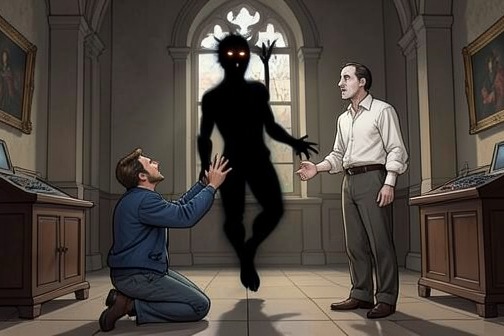
The [Exorcism of Casey](entity:event-recall-event-casey-c171c88aa1cd) is the priests’ effort to free [Casey Hartman](entity:character-recall-character-casey-hartman-5eed61472781) from Malephar, a crisis in which religious judgment must contend with the possibility of illness and the risks of acting too soon. The exorcism succeeds in removing the demon from the adolescent, but its apparent victory proves unstable: Malephar later enters Jason Crowder, while [Casey](entity:character-recall-character-casey-87dc9486b78c)’s subsequent violence leaves the meaning and lasting effects of his possession unresolved.
## Diagnosis and the Question of Possession
Before meeting Casey, Jason tries to answer the Hartman family’s fear in the cautious terms he imagines Father Sutherland would use. He refuses to speculate and lists possible explanations including a seizure or an undetected psychological condition. That hesitation matters: the decision to call Casey possessed could itself cause harm if the diagnosis were wrong.
Father Sutherland explains that he has witnessed four exorcisms, but only two involved what he considered authentic possession. In the other cases, the label compounded suffering: a woman with an untreated personality disorder deteriorated and died in an institution, while a child who feigned possession injured herself, later abused drugs, and died of a heroin overdose at nineteen. By contrast, the two people Sutherland believed genuinely possessed recovered completely after exorcism. His experience makes the ritual neither a reflexive response nor a harmless test; it is an intervention whose consequences depend on discerning what is happening to the person.
## Casey and the Search for an Explanation
When Father Sutherland asks Casey his name, the boy answers Malephar. Sutherland tenses and asks where he heard the word. The exchange turns the question from general suspicion toward a specific, named presence, while also showing that the priests are alert to what Casey says rather than treating the diagnosis as settled in advance.
The priests also consider why Casey has become a host. Jason explains that authentic cases seldom involve a spirit choosing at random and that there is ordinarily some logic to the selection. Liz fears this means her son did something to deserve his condition. Father Sutherland gently rejects that implication, stressing that there are many reasons someone might become a demon’s host. The distinction separates explanation from blame: searching for a pattern in the demon’s choice does not establish Casey’s guilt.
## Caution, Treatment, and the [Exorcism](entity:concept-recall-concept-exorcism-9c3d405a4949)
Even after the signs point toward danger, Father Sutherland takes care not to provoke Casey’s condition unnecessarily. He checks the boy’s heart rate while he sleeps, wanting to ensure Casey is out of immediate danger without rousing the presence. He opposes involving doctors or paramedics at that point because he expects them to administer a sedative, which he fears could prove disastrous. The scene places the family between competing forms of care: medical intervention is not dismissed in principle, but Sutherland believes that this particular response could increase the danger.
Jason and Father Sutherland ultimately exorcise Malephar from Casey. The available account establishes the result without detailing the rite itself: the demon is driven from the adolescent’s body. That removal appears to confirm the priests’ discernment, but it does not settle what Casey has experienced or what the possession has changed in him.
## Aftermath and the Limits of Victory
Malephar’s departure from Casey does not mean the entity has been destroyed. Two nights later, Jason is himself resisting the demon’s attempts to control him. He recalls awakening at a bathroom mirror with a razor drifting toward his throat, and he fears that Malephar may eventually overpower his defenses. The transfer makes the exorcism a turning point in Jason’s own danger as well as Casey’s: the threat has shifted hosts rather than ended.
Casey’s aftermath is equally disturbing. Within the same week as the exorcism, he commits an atrocity. Jason wonders whether the possession has left an indelible emotional stain on the boy, or whether Casey already harbored violent impulses that the revelation of his uncle’s crimes gave him an opportunity to release. He cannot decide between these possibilities. The exorcism therefore frees Casey from Malephar without offering a clear account of responsibility, recovery, or the boundary between an imposed evil and a person’s own capacity for wrongdoing.
Event 10
Murder of Father Sutherland
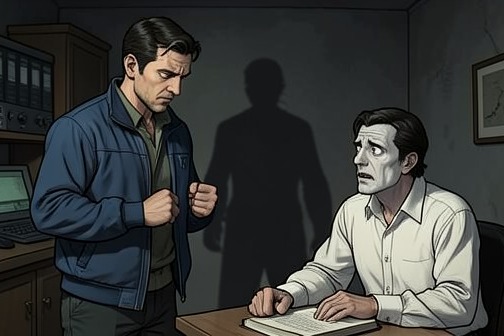
The [Murder of Father Sutherland](entity:event-recall-event-father-sutherland-e6d8fa8d9e5d) is the concealed killing at the center of Jason Crowder’s private guilt and later vulnerability to Malephar. Crowder admits to himself that he killed his mentor in error, but keeps the truth from Father Patterson while the demon turns that secret into a means of breaking the priest’s faith and threatening Crowder with exposure.
## The Concealed Killing
Crowder’s clearest acknowledgment comes during a later crisis over whether to report [Casey Hartman](entity:character-recall-character-casey-hartman-5eed61472781) to the authorities. He recognizes that he cannot tell Father Patterson the full reason for his hesitation: [Casey](entity:character-recall-character-casey-87dc9486b78c) knows that Crowder murdered Father Sutherland. The admission identifies the killing as a secret Crowder has actively withheld, not a suspicion or an accusation made against him by someone else.
Crowder also understands his own culpability as a mistake. He anticipates that if Casey is arrested, Casey will tell the police what Crowder did; Crowder plans to answer by telling the truth, that he killed Father Sutherland in error. He expects this confession to send him to prison for a long time. The mistake does not erase the act or its consequences, but it shapes the way Crowder understands the punishment awaiting him.
## Clues and Misjudgment
Earlier, while investigating the Sweet Sixteen killings, Crowder and [Danny Hartman](entity:character-recall-character-danny-hartman-eba300f82267) discover a loose plank in Father Sutherland’s study. Danny tests the board, finds that it moves, and pries it up with a pocketknife. The space beneath it appears to have been opened and replaced repeatedly, inviting suspicion that it concealed evidence. Instead, it contains no keepsakes from the six dead girls and no trinkets at all—only a recent Penthouse and an old Hustler. The discovery offers no confirmation of the feared connection between Father Sutherland and the murders.
The investigation is surrounded by other unstable clues and conclusions. A newspaper headline announces another Sweet Sixteen strike and an eighth death, while the latest killing is being called a copycat crime. Crowder is convinced that the killing could not have been committed by Danny because of the reported time of death. These competing explanations show how easily the investigation’s apparent evidence can direct suspicion elsewhere; they do not, by themselves, explain Father Sutherland’s murder.
## Guilt and the Choice to Confess
Crowder’s secret affects his judgment when he considers what to do about Casey. Reporting Casey could stop further murders, but would also break [Liz Hartman](entity:character-recall-character-liz-hartman-ee2c1fbf0dbb)’s heart; keeping quiet would leave the danger unresolved. Father Patterson urges him to put an end to the killing, even if Liz must begin grieving. Crowder agrees that Patterson is right and imagines accepting the legal consequences of his own past act rather than allowing the murders to continue.
He considers confessing directly to Father Patterson, despite expecting that Patterson may despise him for killing his best friend. The prospect of telling the truth to another priest briefly appears to offer a way to stop hiding behind the secret. Before Crowder can speak, however, Patterson remarks that [Sister Rebecca](entity:character-recall-character-sister-rebecca-e1246822aee8) has taken a liking to him and admits that he, too, has sometimes felt attracted to her. The conversation turns aside, leaving Crowder’s intended confession unspoken.
## Malephar’s Use of the Secret
The secret reaches Father Patterson by another route. Malephar later tells Crowder that it entered Patterson’s body while Crowder was being helped out of the reservoir. When Crowder grasped Patterson’s hand at the hospital, Malephar says, it showed the priest Crowder’s secrets, including the murder of Father Sutherland. The disclosure shatters Patterson’s faith. What Crowder had feared to confess becomes information the demon can reveal and use against both men.
This delayed revelation makes the killing more than a hidden crime in Crowder’s past: it becomes part of Malephar’s attack on his moral and religious standing. Crowder’s own account marks the death as accidental in the sense that he says he killed Father Sutherland in error, but the concealment leaves him exposed to blackmail, self-condemnation, and the prospect of imprisonment. The episode’s withheld truth also casts a shadow over Crowder’s role as narrator: the reader learns the significance of the killing through his later admission and Malephar’s disclosure, after his secret has already shaped his choices.
Event 11
Murder of Tyler Raines
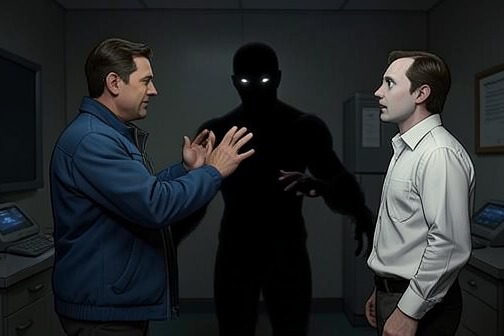
The [Murder of Tyler Raines](entity:event-recall-event-tyler-raines-e755aeb6611d) is the killing [Danny Hartman](entity:character-recall-character-danny-hartman-eba300f82267) commits to silence a witness who can identify him as the real murderer of [Julia Deveroux](entity:character-recall-character-julia-deveroux-11649da40ae2). The sudden throat-slashing turns Raines from a suspect in the investigation into one of Danny’s victims, while Danny’s attempt to frame Jason Crowder compounds the murder with a calculated effort to evade discovery.
## Background and Suspicion
Crowder had already begun to doubt the police theory that Raines killed Julia. When a report said Julia’s death occurred around nine in the evening, Crowder concluded that Danny could not have killed her if the time of death was correct. A copycat killing seemed the only explanation for the changed method of the latest Sweet Sixteen murder, and Julia’s photograph brought Crowder face-to-face with the possibility that he had glimpsed her among Danny’s victims before she died.
That suspicion did not make Raines innocent in every respect. Crowder later acknowledges that Raines harbored unsavory thoughts and might, given time, have let his desires turn to violence. But the distinction is decisive: the novel does not identify Raines as a killer. Danny kills him because Raines can expose Danny, not because Raines murdered Julia.
## The Killing
In the underground corridor, Raines looks at the prone Father Patterson and protests that Danny cannot go around hitting a priest. Danny denies having struck Patterson and draws a long, curved knife from beneath his waistband. Before Crowder can understand what Danny means, Danny swings the knife at Raines and opens his throat with a deep diagonal cut. Blood sprays across Father Patterson’s unmoving back as Crowder freezes, unable at first to react.
Raines remains on his knees, trying to clutch the wound as he bleeds. The scene makes the killing abrupt and unmistakable: Danny does not confront Raines with an accusation or give him a chance to answer; he uses the knife and leaves Crowder to witness the immediate aftermath.
## The Attempt to Frame Crowder
Danny wipes the knife handle and puts it into Crowder’s hand. He then says that Crowder attacked him and that he had to shoot in self-defense, before reaching for his gun. Crowder lunges, knowing that Danny could kill him if he draws, but Danny strikes him in the stomach. In the shifting flashlight beam, Crowder sees Raines still kneeling and attempting to stop the bleeding. The planted knife and Danny’s announced self-defense story turn the scene into an attempted frame-up, with Crowder positioned to appear responsible for the violence.
## Motive and Aftermath
Later, Crowder tells Father Patterson that Raines did not kill anyone and that Danny killed him to protect himself. Patterson asks who killed Julia if Raines was innocent, and Crowder names [Casey Hartman](entity:character-recall-character-casey-hartman-5eed61472781). Crowder’s later reflection clarifies the motive for Raines’s murder: Raines knew Danny’s secret and could identify him. Danny’s act therefore removes a witness to his crimes while reinforcing the false trail that had led Crowder to suspect Raines.
The murder also sharpens the contrast between suspicion and proof. Raines’s disturbing thoughts had made him seem capable of violence, but they did not establish that he was the [Sweet Sixteen Killer](entity:expression-recall-expression-sweet-sixteen-kill-420ef6e3111f). Danny exploits that uncertainty, killing the man who can recognize him and trying to make the witness’s death incriminate Crowder instead.
Event 12
Murder of Julia Deveroux
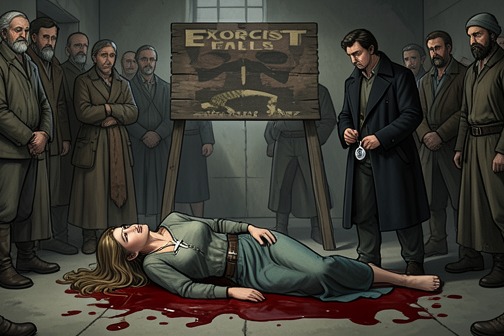
The [Murder of Julia Deveroux](entity:event-recall-event-julia-deveroux-d3cac0ae8ce1) is the killing that overturns Jason Crowder’s attempt to distinguish a copycat from the [Sweet Sixteen Killer](entity:expression-recall-expression-sweet-sixteen-kill-420ef6e3111f). [Casey Hartman](entity:character-recall-character-casey-hartman-5eed61472781) eventually identifies himself as Julia’s murderer, displays her emerald-lined crucifix, and reveals that his uncle [Danny Hartman](entity:character-recall-character-danny-hartman-eba300f82267) coached him. The disclosure recasts the case not as a single killer’s return, but as violence passed from one family member to another.
## The Investigation and the Copycat Theory
Julia becomes the newest victim in the Sweet Sixteen killings. A newspaper headline announces that the death toll has reached eight, while the changed method leads people to call the latest murder a copycat. Crowder is already inclined to that explanation. Police place the killing at about nine in the evening, a time that, in his reasoning, makes it impossible for Danny to have committed it. The apparent mismatch between the crime and the established pattern seems to separate Julia’s murder from the earlier killings; in retrospect, it conceals the more unsettling possibility that the pattern has acquired another perpetrator.
Crowder’s connection to Julia is indirect but haunting. During an earlier encounter with Danny, he glimpsed Julia among the faces in Danny’s thoughts: a schoolgirl walking with friends, apparently unaware of the danger around her. When a photograph of Julia in her school uniform is shown to him, Crowder recognizes her as that same girl. The image moves her from an impression in another man’s mind into the reality of a dead victim, but it does not yet reveal who killed her.
## [Casey](entity:character-recall-character-casey-87dc9486b78c)’s Confession
The decisive revelation occurs when Casey extends a hand to Crowder with [Julia Deveroux’s emerald-lined crucifix](entity:object-recall-object-julia-deveroux-s-emera-2ef0e3235f18) in his palm. The object identifies a concrete connection between Casey and the victim; it is not merely an accusation or a disputed interpretation. Casey then tells Crowder, “Uncle Danny coached me. He told me exactly what to do.” His admission identifies Casey as the murderer and Danny as the person who instructed him, while leaving the precise circumstances of the killing and the extent of Danny’s participation unstated.
Casey makes the confession more disturbing by describing his experience in terms of pleasure and newfound confidence: “I enjoyed it. Losing my virginity and stopping her screams—” He presents the violence as a way of overcoming fear and feeling powerful, rather than expressing remorse for Julia. His words expose the human cost behind the case’s changing pattern: the murder is not simply a copycat crime, but an act Casey claims for himself, learned under Danny’s direction and embraced as a transformation in his own sense of power.
## The Murder’s Aftermath
Casey also invokes Crowder’s past, telling him, “You’re a killer too. Don’t deny it.” The accusation turns the confession into a confrontation: Casey is not only disclosing Julia’s murder but trying to implicate Crowder in violence of his own. Crowder is struck most forcefully by the crucifix and Casey’s admission. When Casey leaves, Crowder flees to the basement corridor, grieving that he had once again mistaken an innocent person for a murderer. He recognizes that his belief about Danny and the timing of the crime had not brought him closer to Julia’s killer; it had helped keep Casey’s identity concealed.
The revelation also sharpens the significance of Danny’s separate violence. Crowder understands that Danny killed [Tyler Raines](entity:character-recall-character-tyler-raines-b6a0fb283656) because Raines could identify him, not because Raines himself was a killer. In the same aftermath, Crowder locates Julia’s true murderer in the luxurious house on [Rosemary Road](entity:location-recall-location-rosemary-road-6dd28f2c26fc), where Casey lives with his mother and sister. The proximity of the killer to his family makes the discovery especially painful: Crowder thinks of Liz, who has already lost a husband and may now lose her son as well.
## Significance
Julia’s murder changes the meaning of the copycat theory. The altered method had suggested an imitation by an unknown offender; Casey’s confession instead reveals a coached successor whose crime extends the violence into Danny’s family. The case’s apparent distinctions between killers prove dangerously unreliable: Danny’s timeline seemed to exclude him, while Casey’s presence in an ordinary family household gave no visible warning of what he had done.
The disclosure also marks a failure in Crowder’s efforts to read guilt from incomplete signs. Julia had appeared in his perception before her death, and her crucifix finally supplies a material link to Casey, but neither earlier impression nor investigative inference had yielded the truth in time to save her. By the time Casey names himself, the murder is no longer only an unsolved crime in a sequence. It is the revelation that Danny’s influence has helped produce another killer—and that Casey regards this inheritance not as a burden, but as a release from fear.
Event 13
Casey’s confession of murder to Crowder
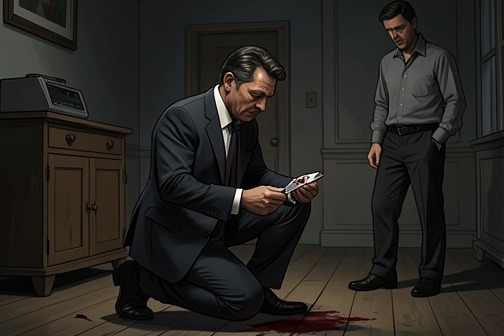
[Casey Hartman](entity:character-recall-character-casey-hartman-5eed61472781)’s confession to Jason Crowder reverses the investigation’s apparent conclusion: [Casey](entity:character-recall-character-casey-87dc9486b78c) admits that he murdered [Julia Deveroux](entity:character-recall-character-julia-deveroux-11649da40ae2), identifies [Danny Hartman](entity:character-recall-character-danny-hartman-eba300f82267) as his coach and source of knowledge about the murders, and reveals that Crowder’s own concealed crime gives him leverage. The confession does more than identify another killer. It exposes how Crowder’s repeated misjudgments and buried guilt have made the truth both urgent and dangerous to disclose.
## The Evidence That Failed to Settle the Case
Before Casey speaks, Crowder’s investigation has already taught him how easily an apparent clue can become a misleading explanation. In Father Sutherland’s study, a loose floorboard proves to have been lifted and replaced repeatedly. Crowder and Danny Hartman find no keepsakes from the six dead girls beneath it, only a recent Penthouse and an old Hustler. The discovery supplies no trophy collection that could straightforwardly identify the killer; instead, it leaves Crowder weeping over what the search has failed to establish.
Another episode makes the limits of Crowder’s judgment physical. During a conversation, he unknowingly drives a cruciform letter opener through the back of his hand and out the other side. Malephar has made him so insensible to pain that he does not realize he has wounded himself. Crowder recognizes that the demon’s ability to turn an accessible object into a weapon, while concealing the injury from him, is frightening in its own right. His investigation proceeds alongside a compromised awareness of his own actions.
The public account of the latest killing appears to support a different division of responsibility. A printed headline declares that the [Sweet Sixteen Killer](entity:expression-recall-expression-sweet-sixteen-kill-420ef6e3111f) has struck again and puts the death toll at eight; people are already calling the killing a copycat crime. Crowder, too, concludes that it must have been another killer: if the police have fixed the time of Julia Deveroux’s death at around nine in the evening, he believes Danny could not have killed her. That inference points away from Danny without yet identifying Casey. The confession will reveal how badly the available explanation has failed.
## What Casey Reveals
Casey begins by telling Crowder that Danny had disclosed the murders to him. Danny had said that he intended either to kill himself or to surrender, because Crowder would report him to his superiors and arrest was only a matter of time. Casey’s account thus identifies Danny not merely as a relative who knew about the crimes, but as someone who understood that Crowder’s investigation threatened to expose him.
Casey then rejects the explanation Crowder has accepted for [Tyler Raines](entity:character-recall-character-tyler-raines-b6a0fb283656)’s death: it was not Raines who killed Julia. Casey tells Crowder that Danny had explained what Crowder did to Father Sutherland, and calls Crowder a killer as well. Before Crowder can answer, Casey holds out Julia’s emerald-lined crucifix. The object connects Casey’s accusation to Julia and makes the disclosure tangible: this is not only a dispute about what Danny told him, but a confrontation over the victim and the crime Crowder had failed to attribute correctly.
Casey says Danny coached him and told him exactly what to do. He then admits that he enjoyed the murder, describing the loss of his virginity and the silencing of Julia’s screams as part of the same confession. His insistence that he was no longer afraid gives the admission a chilling personal dimension: he presents the killing as an experience that changed how he felt about himself, not simply as an act he was forced to perform. The confidence he claims is bound to the violence he has committed.
## The Confession Becomes a Threat
Crowder reaches for the crucifix, but Casey snatches it away. He threatens that if Crowder tells anyone what he did, he will tell everyone the truth about Crowder. The threat binds the two men through separate crimes: Casey can expose Crowder’s concealed responsibility for Father Sutherland’s death, while Crowder now knows that Casey killed Julia. Casey refuses Crowder’s attempt to talk and walks away with the crucifix, retaining both the evidence and control of the encounter.
Crowder flees down the stairwell to an empty basement corridor, crying over Casey’s admission. He recognizes that he has once again mistaken an innocent man for a murderer. The reversal does not make Raines innocent of every troubling thought: Crowder believes Raines harbored unsavory desires and might, given time, have acted on them. But Danny killed him because Raines was not the killer and could identify Danny. Crowder is relieved that he did not kill Raines himself, even as he acknowledges that Danny did.
That distinction does not absolve Crowder. Casey’s accusation returns him to the unresolved fact of Father Sutherland’s death, and he understands that Casey is likely to tell the police after an arrest. Crowder privately reasons that he would then have to admit he killed Father Sutherland in error and face a long prison sentence. His own guilt is therefore not a hypothetical secret invoked only by Casey; it already shapes what Crowder believes he can do next.
## The Choice Afterward
Crowder weighs reporting Casey against the cost to [Liz Hartman](entity:character-recall-character-liz-hartman-ee2c1fbf0dbb). He tells his companion that going to the authorities would stop the murders but break Liz’s heart. The reply insists that Liz should begin healing now if doing so means no more dead children. Crowder accepts the argument. The decision is not a clean escape from his own exposure: if Casey tells the police what Crowder did, Crowder says he will tell them the truth about Father Sutherland’s death.
The confession therefore closes one mistaken line of reasoning while opening a moral decision Crowder cannot keep private indefinitely. Casey’s disclosure identifies Julia’s killer and clarifies Danny’s influence; Casey’s blackmail simultaneously forces Crowder to confront his own crime. The scene’s final pressure falls on the difference between protecting a family from grief and preventing further deaths. Crowder chooses the latter, accepting that the truth about his own actions may follow.
Event 14
Malephar possesses Father Patterson and murders Sister Rebecca
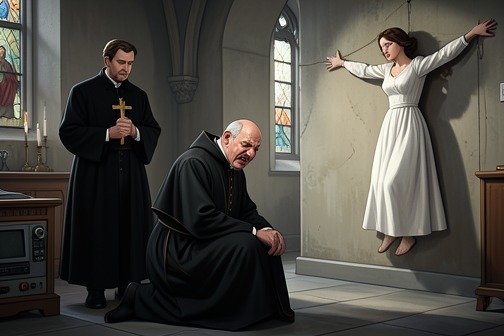
Malephar’s possession of Father Patterson and the murder of [Sister Rebecca](entity:character-recall-character-sister-rebecca-e1246822aee8) turn Crowder’s rescue from the reservoir into a trap: the demon has found a new host, learned Crowder’s secrets, and arranged for the evidence to point toward him.
## Background and Transfer
Earlier, Crowder had resisted Malephar’s attempts to control him after the demon entered his body. The possession did not last. Malephar later explains that it entered Father Patterson while Crowder was being helped out of the reservoir. When Crowder grasped the priest’s hand at the hospital, the demon used that contact to show Patterson Crowder’s secrets, including that Crowder had killed Father Sutherland. Malephar says the revelation shattered Patterson’s faith and made him a suitable host. This account connects the demon’s transfer not to an exorcism or deliberate invitation, but to a brief encounter during Crowder’s rescue.
## Murder and Exposure
When Jason Crowder asked where Sister Rebecca had gone, Father Patterson assured him she was in the office and directed him to look over his shoulder. The reassurance gave way to a staged revelation: Sister Rebecca’s body had been nailed to the back wall, and her limbs had been spread in a brutal display. Crowder recoiled, unable to bear the sight. Flies gathered around the corpse, and cruciform letter openers had been used to pin her feet; the office’s ordinary objects had become instruments of the crime.
Father Patterson answered Crowder’s horror with eerie calm, treating death as natural. Then the voice speaking through him blamed Crowder for killing one of Malephar’s servants. The name Malephar had not yet been spoken, but the entity addressed Crowder as “Craven,” exposing its identity and turning the accusation into a personal taunt. It explained that Patterson had been a fortunate arrival and a perfect host, confirming that the demon had taken possession of him.
Malephar also disclosed how it had learned what to use against Crowder. After entering Patterson while Crowder was being helped out of the reservoir, it showed the priest Crowder’s secrets when Crowder grasped his hand at the hospital. Among them was Crowder’s responsibility for Father Sutherland’s death, a revelation Malephar said had shattered Patterson’s faith. The scene therefore links the new possession to the earlier rescue and transforms a moment of contact into the means of betrayal.
The murder was also designed to implicate Crowder. Malephar warned that Crowder’s fingerprints covered the office and that Sister Rebecca’s blood would be used against him, promising public disgrace and arrest for the killing. Patterson wore clear plastic gloves as the possessed body moved toward Crowder, making the threat feel calculated as well as supernatural: Malephar had killed Sister Rebecca, taken a priest’s body, and arranged the scene so that the evidence would point toward Crowder.
## Desecration of Clerical Authority
The scene makes the church’s own roles part of Malephar’s assault. Father Patterson’s calm manner and priestly authority first disguise the danger; once Malephar speaks through him, that same authority becomes a weapon for accusing Jason Crowder and threatening his standing. Sister Rebecca’s murder inside the church office turns a place of clerical work into a staged spectacle, while the demon’s reference to her as a “virgin” recasts the killing in language meant to shame and condemn Crowder.
That reversal reaches beyond the immediate threat of arrest. Malephar uses knowledge of Jason Crowder’s responsibility for Father Sutherland’s death to make the possessed priest an instrument of spiritual judgment as well as physical danger. The episode thus entwines the supernatural struggle with the institutions that might otherwise offer refuge: clerical trust has been corrupted from within, and evidence arranged for the authorities is made to reinforce the demon’s accusation.
## Evidence, Knowledge, and the Frame
The scene makes the account of the possession inseparable from the threat it describes. Malephar explains its arrival in Father Patterson’s body and the discovery of Crowder’s secret while speaking through that body; the reader receives the explanation from the culprit, at the moment it is using the revelation to intimidate its target. The corpse, the letter openers, and the gloves offer tangible details, but those details cannot establish an innocent account of what happened: Malephar has already claimed responsibility for arranging the circumstances in which they will be read. Evidence in this episode is not simply absent or misleading; it has been turned into an instrument of accusation.
That structure gives the scene a double revelation. Malephar’s words disclose how it has exploited contact and concealed itself within a trusted figure, while the physical staging shows how supernatural knowledge can be translated into a seemingly ordinary criminal case. The episode therefore shifts the danger from possession alone to the struggle over who controls the meaning of what can be seen and proved.